HSVTOL: Next Generation Mobility
High-Speed Vertical Takeoff and Landing (HSVTOL) Aircraft Concept
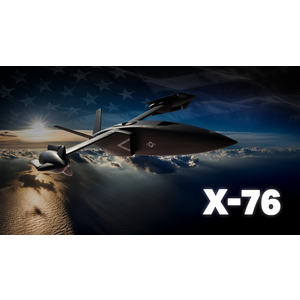
Introducing X-76
Bell Completes Critical Design Review on DARPA SPRINT X-Plane Program
HSVTOL: Multi-mission runway independence
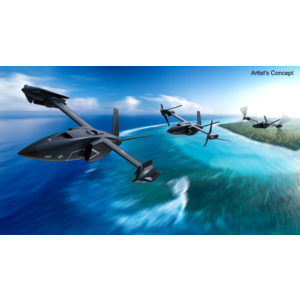
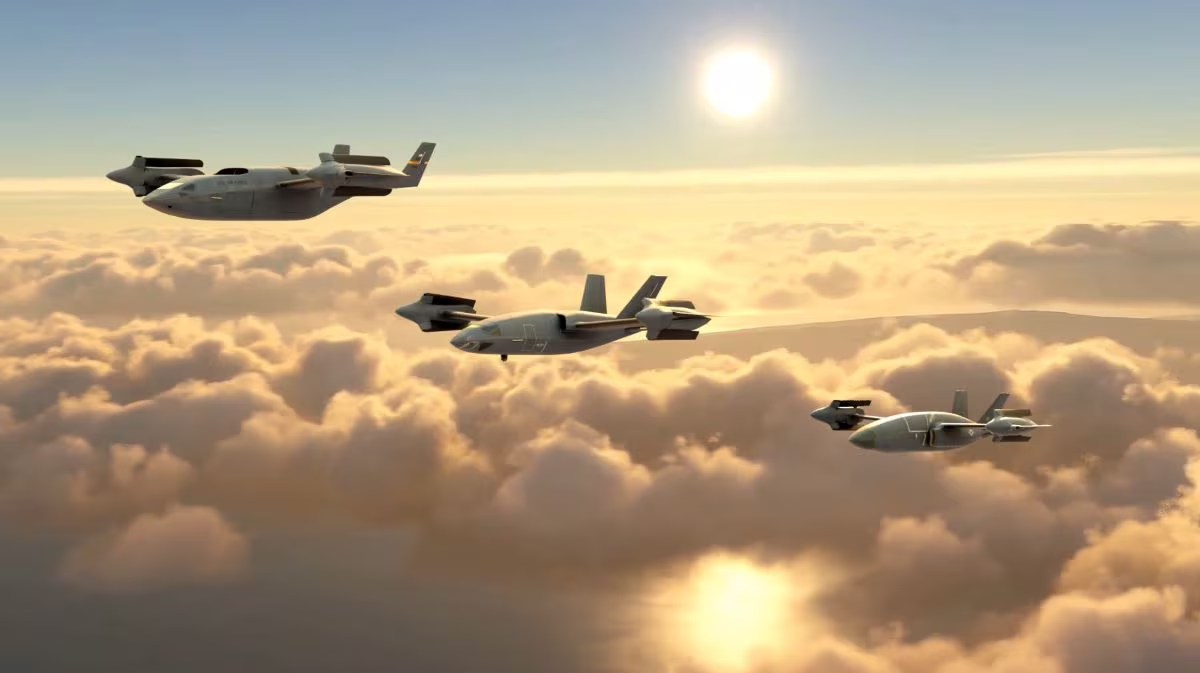
High-Speed Vertical Takeoff and Landing (HSVTOL) is a game-changing blend of helicopter hover capability and jet-like speed, range and survivability. Bell's scalable family of aircraft concepts are specifically designed to meet the critical mission needs of today and tomorrow. Advanced features like vertical, short, and conventional takeoff provides enhanced runway independence. Improved survivability and flexible payload configurations allows for increased mission flexibility, and superior performance over legacy platforms.
.gif)


Bell’s HSVTOL technology builds on its demonstrated history of fast flight from the first aircraft to break the sound barrier, the Bell X-1, to the revolutionary XV-15. This technology will bring a new era of next generation vertical lift aircraft that will deliver revolutionary warfighting capability.
Next Generation Digital Design and Prototyping
Bell’s state of the art design process incorporates model based design and simulation with a collaborative government and industry design space to rapidly synthesize and validate concept attributes. Bell’s rapid prototype and production capability expedites development to fielding for innovative solutions.
.webp)
.svg)
Low downwash hover capability

Jet-like cruise speeds over 400kts

True runway independence and runway flexibility
.svg)
Scalable to the range of missions from unmanned personnel recovery to tactical mobility

Aircraft gross weights range from 4,000 lbs. to over 100,000 lbs.
Runway Independence and Flexibility
HSVTOL represents a significant advancement in vertical lift capability, offering unparalleled runway independence and flexibility. Conventional and damaged runways, austere land-based as well as sea basing locations are all potential basing locations holding global adversaries at risk. This flexibility and adaptability, enables warfighters to respond quickly to changing operational requirements.
%20(1).gif)
Hover Technology
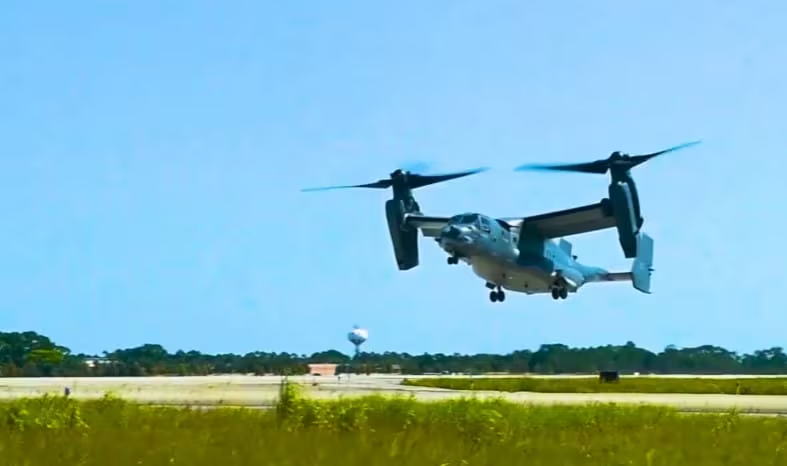

At the center of HSVTOL technology lies Bell’s folding rotor design that efficiently converts horsepower into vertical lift thrust, enabling superior, efficient hover capability. This rotor is specifically engineered to produce lift without creating adverse downwash conditions, providing increased safety for ground operations and ground personnel.
Downwash Velocity: 60-90 mph
Disk Loading: 10-25 lbs/ft2
Hover Efficiency: 4-6 lbs/hp

.gif)
Total Mission Survivability
Bell's HSVTOL technology offers a unique blend of increased stealth and agility. Advanced propulsion and digital flight control technologies minimize signature during cruise and terminal area operations. An advanced mission systems suite provides offensive and defense capabilities to allow next generation warfighters to operate with confidence even in the most challenging environments.
Pioneers in high-speed aircraft for more than eight decades
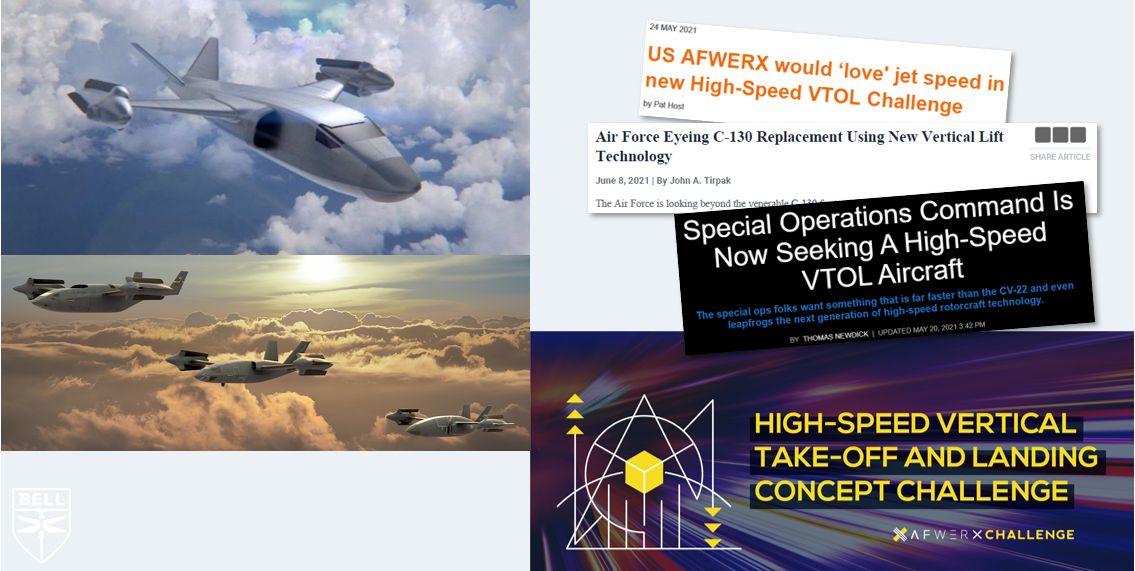
With an impressive track record of innovation in high-speed vertical aircraft design and flight capabilities. Since the breaking the sound barrier with the historic Bell X-1 Bell has consistently pushed the boundaries. Our pioneering VTOL prototypes, including the X-14, X-22, XV-3, XV-15, Bell 533, and TR911X, laid the foundation for revolutionary changes in vertical lift aircraft. At Bell, we are committed to staying at the forefront of next generation capability and meeting the evolving needs of today and tomorrow’s warfighters.
2020s
HSVTOL risk reduction via technology demonstrator.
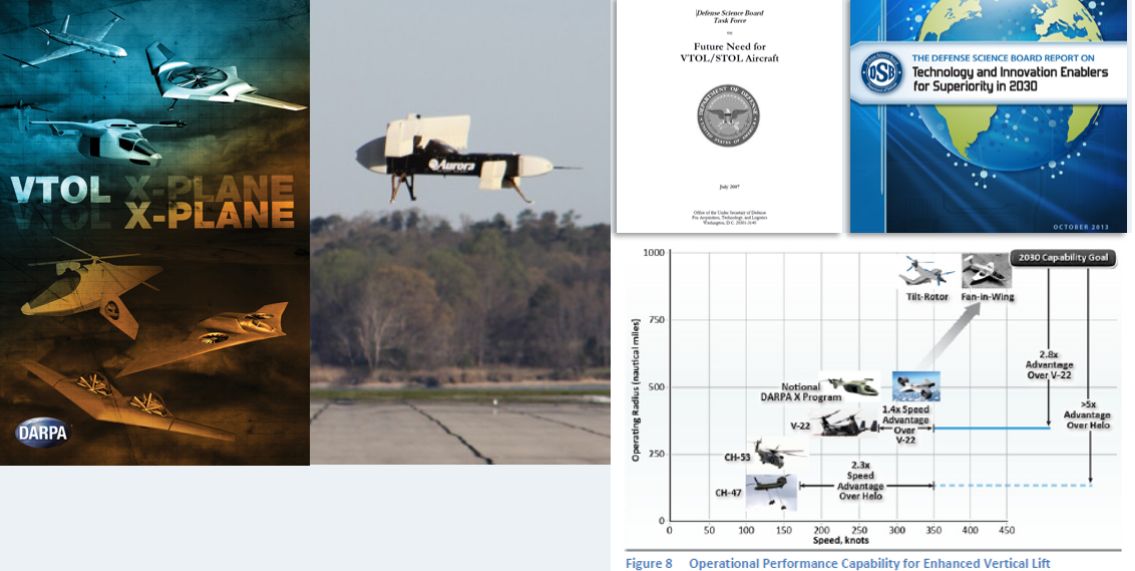
2000s
Continued configuration refinement.
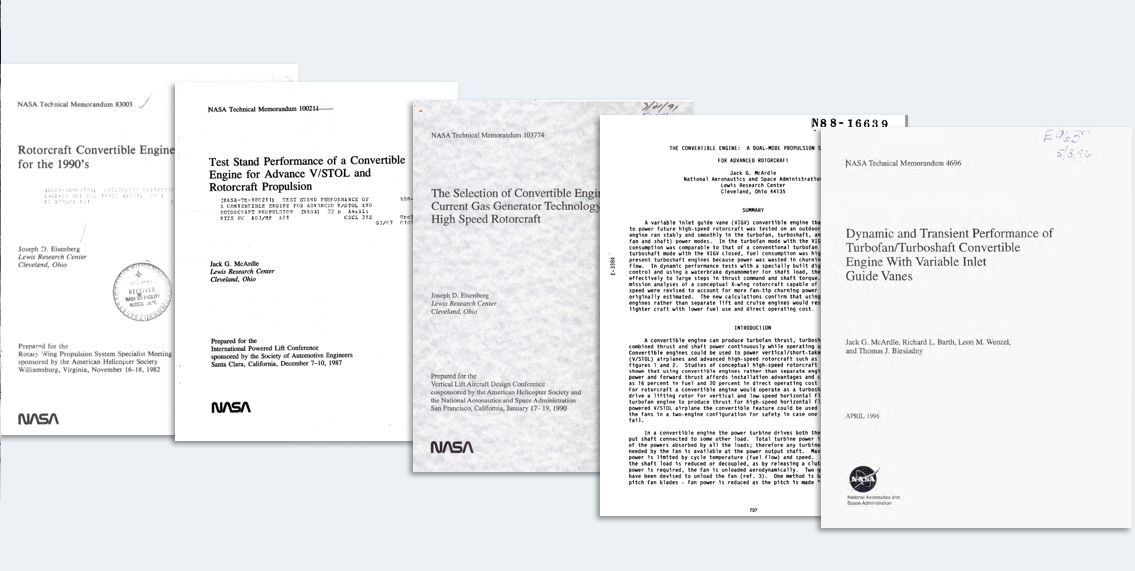
1990s
Extensive study on concepts and engine technology.
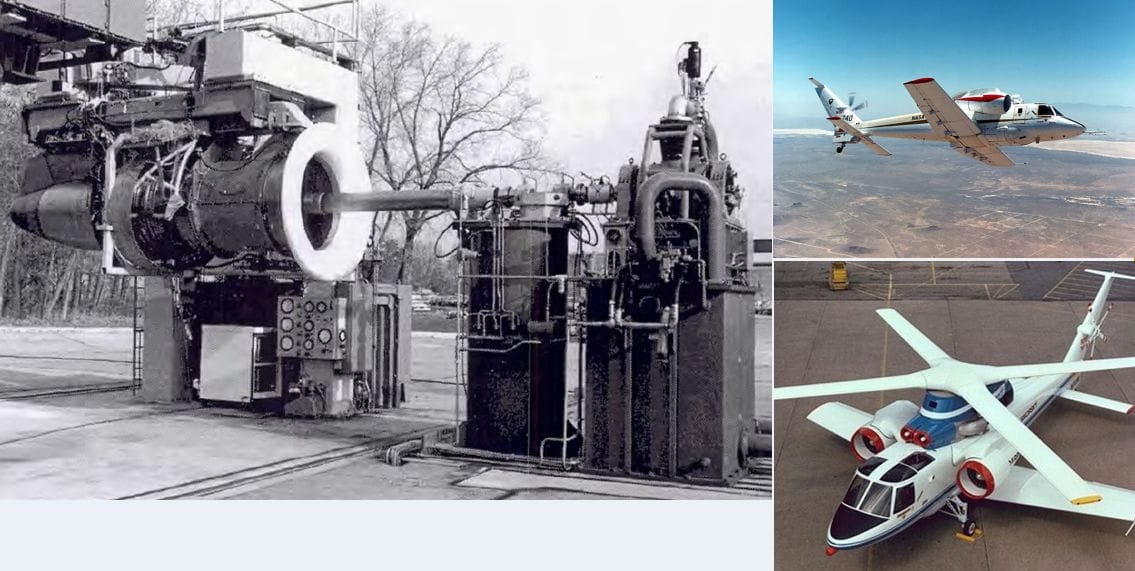
1980s
Convertible engine feasibility demonstration.
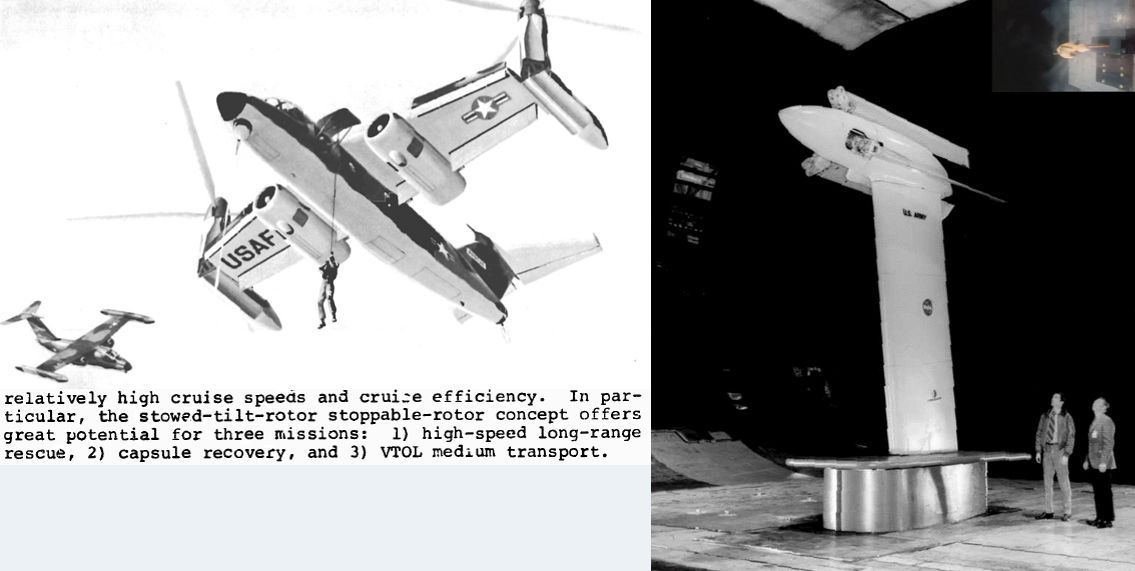
1970s
HSVTOL rotor technology feasibility demonstration, USAF mission need refinement.
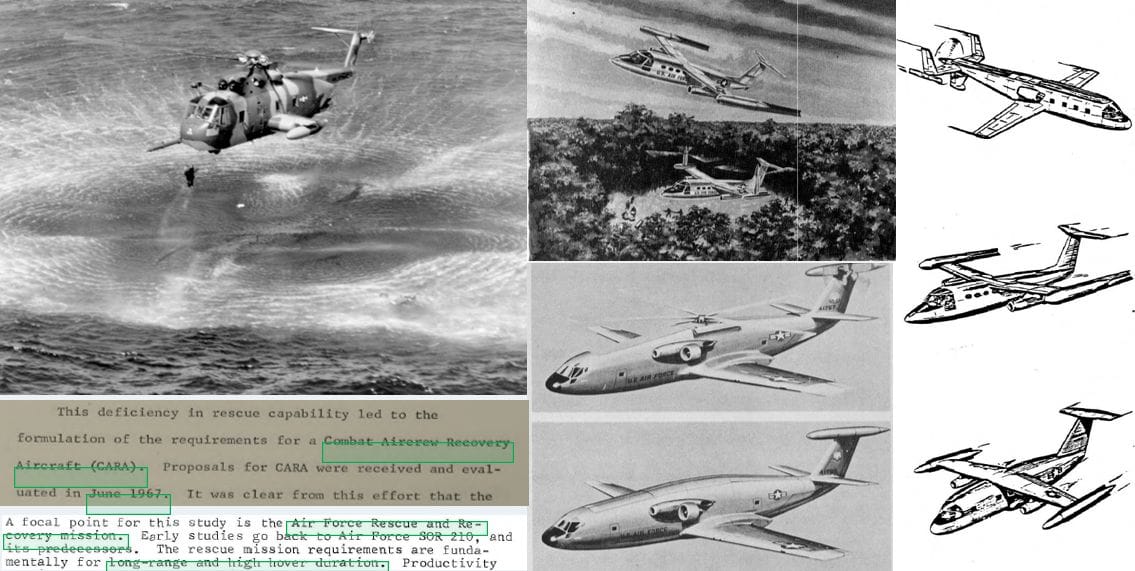
1960s
Initial concepts developed.
Frequently Asked Questions
Runway independence is a critical capability that provides our forces in the Pacific with the agility to respond rapidly to changing situations and evolving threats. By reducing our dependence on fixed infrastructure, our forces gain greater mobility and flexibility, which enhances our readiness and effectiveness across a range of operational scenarios. With HSVTOL, we can execute Logistics Under Attack, enable SOF Mobility, conduct ISR/Strike missions, and support Personnel Recovery and Aeromedical Evacuation with ease.
Bell is actively working to reduce the development timeline and risk associated with fielding this revolutionary capability. A key milestone for this technology is to demonstrate in flight the transition from vertical lift mode into cruise mode. It is possible to do this within the next several years.
No, Bell's HSVTOL technology does not depend on the development of a new propulsion capability. Bell's split propulsion engine architecture utilizes power dense off-the-shelf engines for vertical lift and high speed cruise. These engines are available today and apply to a wide range of HSVTOL configurations. Convertible engine technology that utilizes a shaft mode for vertical lift and efficient turbofan thrust for cruise mode may allow for improved performance and integration ease. Bell's propulsion team has developed technology that utilizes high technology readiness elements to reduce the development timeline and cost to field this capability.
As the aviation industry explores new horizons, electrification and eVTOL present intriguing possibilities for vertical lift aircraft. However, while these technologies offer exciting new configurations to consider, their limitations must also be acknowledged. Bell's HSVTOL technology, which prioritizes next-generation speed, range, and survivability, requires performance levels that current electric motors, generators, and electrical distribution efficiencies cannot yet provide. This becomes even more critical when considering larger variants of HSVTOL. While we continue to explore the potential of electrification in vertical lift aircraft, Bell remains committed to delivering the highest level of performance and reliability to meet the evolving mission needs of our customers.