Where the Journey Begins
For many JDF aviators, interest in flying started early. They remember watching helicopters overhead and wanting to be part of the team that supports Jamaica. For those who earn a place in the Caribbean Military Academy's School of Aviation, that early interest becomes the drive behind their rotary training.
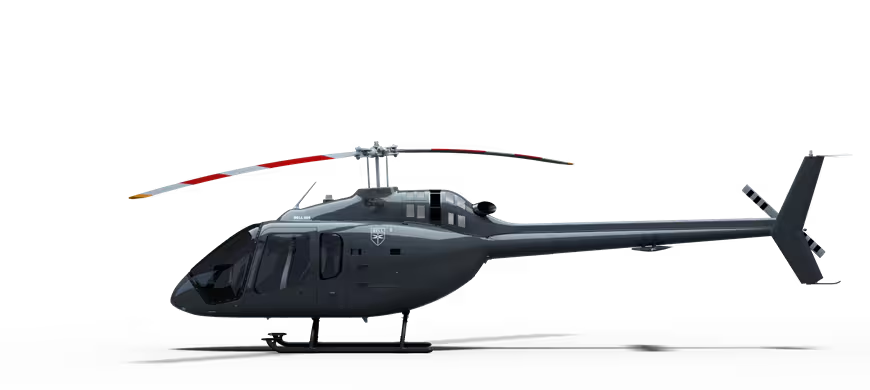
Their introduction to helicopter flight begins in the Bell 505. Students quickly learn that rotary flight requires constant attention and precise control. Every movement teaches something new about the aircraft.
Hovering becomes the first major milestone. Once students begin to understand how the aircraft responds, instructors see confidence form. The training structure is designed to reinforce that moment, using deliberate steps that sharpen discipline and situational awareness. These early lessons prepare pilots for the operational flying they may perform across the island.
Mentorship and Standards
Instructor pilots play a central role in shaping future aviators. Students often credit their confidence to the instructors guiding them through each phase of training. Bell reinforces that confidence by giving operators training support that fits their mission. Many units build long-term relationships with Bell Training Academy that allow them to shape their programs around specific goals. This tailored support strengthens instruction and helps students grow into confident, capable decision makers.
JDF instructor pilots describe their approach as a balance of realism and safety. They expose their students to the types of decisions they may face during operational flying. They adjust their coaching as confidence builds. The Bell 505 supports their training process by giving instructors the oversight they need while still keeping students responsible for the controls. The goal is to build capable JDF pilots who are ready for more advanced missions.
A Training Aircraft Built for Growth
The JDF story prioritizes people, but the aircraft they use influences how those people learn. Pilots and instructors highlighted several characteristics of the Bell 505 that support early development. Even though rotary flight demands constant attention, students say the Bell 505 gives them room to learn.
Pilots noted that the Garmin G1000H NXi cockpit creates familiarity with their fixed wing phase. The continuity helps reduce workload during the steepest part of helicopter training. Instructors said this gives students a foothold when they are learning how to manage new inputs and monitor the aircraft in a variety of training environments. Autorotation behavior is another advantage. The aircraft's rotor system provides inertia that helps students stay composed during emergency practice and understand how attitude affects recovery inputs.
The FADEC-equipped engine also helps in Jamaica's warm climate. 'Hot starts aren't something we have to be concerned about.'
- Major Denver Ennis, JDF Air Wing
That realiability supports daily training by reducing the chance of delays or complications during repeated starts. Together, the aircraft and curriculum create an environment where students can build strong fundamentals before moving into subsequent operational phases.
A Seamless Step Into Real Missions
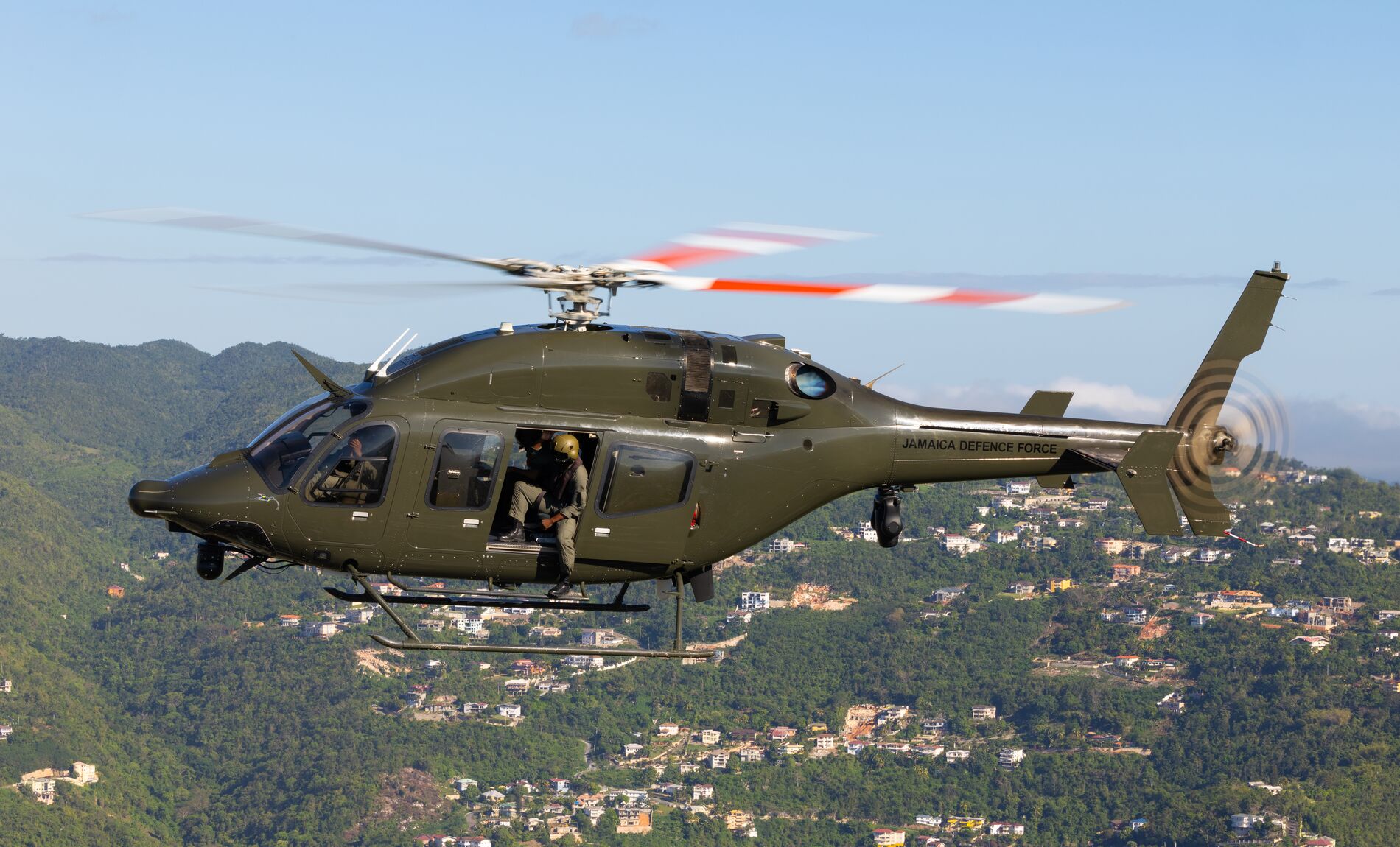
After completing the rotary phase, pilots move to the JDF Air Wing to begin flying the Bell 429. Although the aircraft is larger and more complex, pilots describe the transition as smooth because the fundamentals built in the Bell 505 carry directly into the next platform. Pilots step into operational flying quickly. They support troop insertions, medical transport, maritime operations, wildfire response, and agency assistance. These missions require judgment in varied terrain and under changing conditions. Pilots said the stability augmentation system in the Bell 429 helps reduce workload during demanding tasks and builds confidence as they take on operational responsibilities.
The Storm That Tested Everything
In October 2025, Hurricane Melissa struck Jamaica. The damage was severe. Power lines were down. Communication was limited. Communities were isolated. Crews gathered at 6:00 a.m., launched at 7:00 a.m., and were over western Jamaica by 8:00 a.m. As crews mobilized, the mixed fleet quickly became essential to reaching isolated communities. Pilots described how both aircraft supported different needs. The Bell 429 carried out heavy lift assignments. The Bell 505 moved personnel, equipment, food, and care packages into hard-hit areas.
A newborn Casualty Evacuation (CASEVAC) became one of the most memorable missions. The infant became unresponsive during transport, but the crew's actions stabilized the baby and ensured a safe outcome. Moments like this remind crews why the fundamentals built during training matter. Night operations brought additional challenges. With debris shifting and landing zones changing, pilots relied heavily on Night Vision Goggles (NVGs) and training. These missions required calm decision-making in dark, unfamiliar terrain. Maintainers worked long hours behind the scenes. Their commitment kept aircraft flying when communities needed help most. The response to Hurricane Melissa demonstrated the value of strong training, capable aircraft, and a team that is ready to act under pressure.
Purpose at the Center of Service
One message stands out across interviews. JDF aviators carry a strong sense of responsibility to their nation. That purpose reflects the Air Wing's motto, We Fly for All. It guides how pilots train, fly, and serve.
The training pipeline built by the Jamaica Defence Force and the Caribbean Military Academy prepares aviators who are ready to support the nation across a broad range of mission requirements. Their story is one of service, readiness, and commitment. And through each stage of that journey, the Bell 505 and Bell 429 stand alongside them, supporting the people who carry that mission into every corner of Jamaica. The Bell customer support team stands beside those aircraft, helping ensure the crews have what they need to keep flying and serving their nation.
When the people of Jamaica need help, I'll be there helping them out whenever they need help.
- Captain Russell Graham, JDF Air Wing
Ready to Elevate Your Fleet?
Interested in Bell Insights?
Get exclusive, unreleased Bell updates, videos and aircraft news before anyone else. Join the future of vertical lift, today.