Why Mission Configurations Matter
The effectiveness of public safety helicopters lies in their aerial perspective, highly trained crews, and specialized mission equipment. But here’s the catch: there’s no “standard” configuration for these aircraft. Each operator’s mission is unique, influenced by factors like jurisdiction size, demographics, and mission frequency. For example, a municipal police helicopter might prioritize routine patrol with high-definition cameras and extended station-time endurance, while a state agency might focus on SAR or firefighting missions with entirely different equipment needs.
The Complexity of Customization
Customizing a helicopter isn’t just about adding equipment—it’s about balancing priorities. Operators must define their primary mission and weigh it against secondary missions. For instance, a patrol-focused operator might need a high-performance infrared camera to read license plates from a mile away, but adding this capability increases weight, which impacts range, endurance, and hover performance. Similarly, a medical transport operator might prioritize cabin space for patients over advanced imaging systems.
Key Considerations for Mission-Driven Configurations
Define the Mission
What is the primary mission? How often are secondary missions performed? What equipment is essential versus optional? These questions are the foundation of effective customization.
Weight Matters
Every piece of equipment adds weight, which impacts performance across all missions. Operators must carefully evaluate the trade-offs between capability and aircraft performance.
Budget and Politics
Customization must align with financial realities and political landscapes. Operators need to justify costs and plan for future mission needs, as helicopters are typically replaced only every 10 years or more.
OEM Options
Helicopter manufacturers play a critical role in customization. Operators benefit from OEMs that offer flexible equipment options, allowing them to define their mission rather than having it dictated by the manufacturer.


Common Configuration Areas
Communications
Tactical radios are essential for coordination with ground forces, command centers, and neighboring agencies. Encryption, multi-band capabilities, and integration with other systems like satellite phones are key considerations.
Imaging Systems
Infrared and electro-optical cameras are vital for surveillance and search missions. Operators must balance resolution, range, and weight while considering integration with mission computers and downlink systems.
Lighting
Searchlights with advanced features like geo-synchronization and camera slaving enhance nighttime operations. NVG compatibility is also critical for agencies using night vision goggles.
Additional Equipment
Hoists, cargo hooks, medical kits, water suppression tanks, and fast rope systems are just a few of the options that can be tailored to specific mission needs.
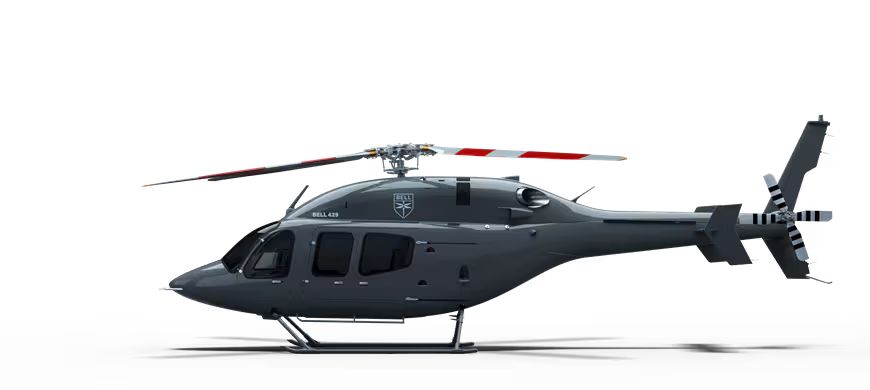
Hear from the Swedish National Police on their operation and configuration of their fleet of Bell 429s: TFOs and Pilots on the Bell 429.
The Bottom Line
Customizing public safety helicopters is a complex but essential process. It starts with a well-defined mission, considers budget constraints, and prioritizes weight management. The goal is to create a helicopter that meets the operator’s unique needs while maintaining the flexibility to adapt to future challenges. With the right approach, public safety helicopters become powerful tools for protecting lives and property. To explore our full white paper on configuration considerations, visit Starting a Police Aviation Unit White-paper.


Interested in Bell Insights?
Get exclusive, unreleased Bell updates, videos and aircraft news before anyone else. Join the future of vertical lift, today.