
Air Transport Europe and the Bell 429
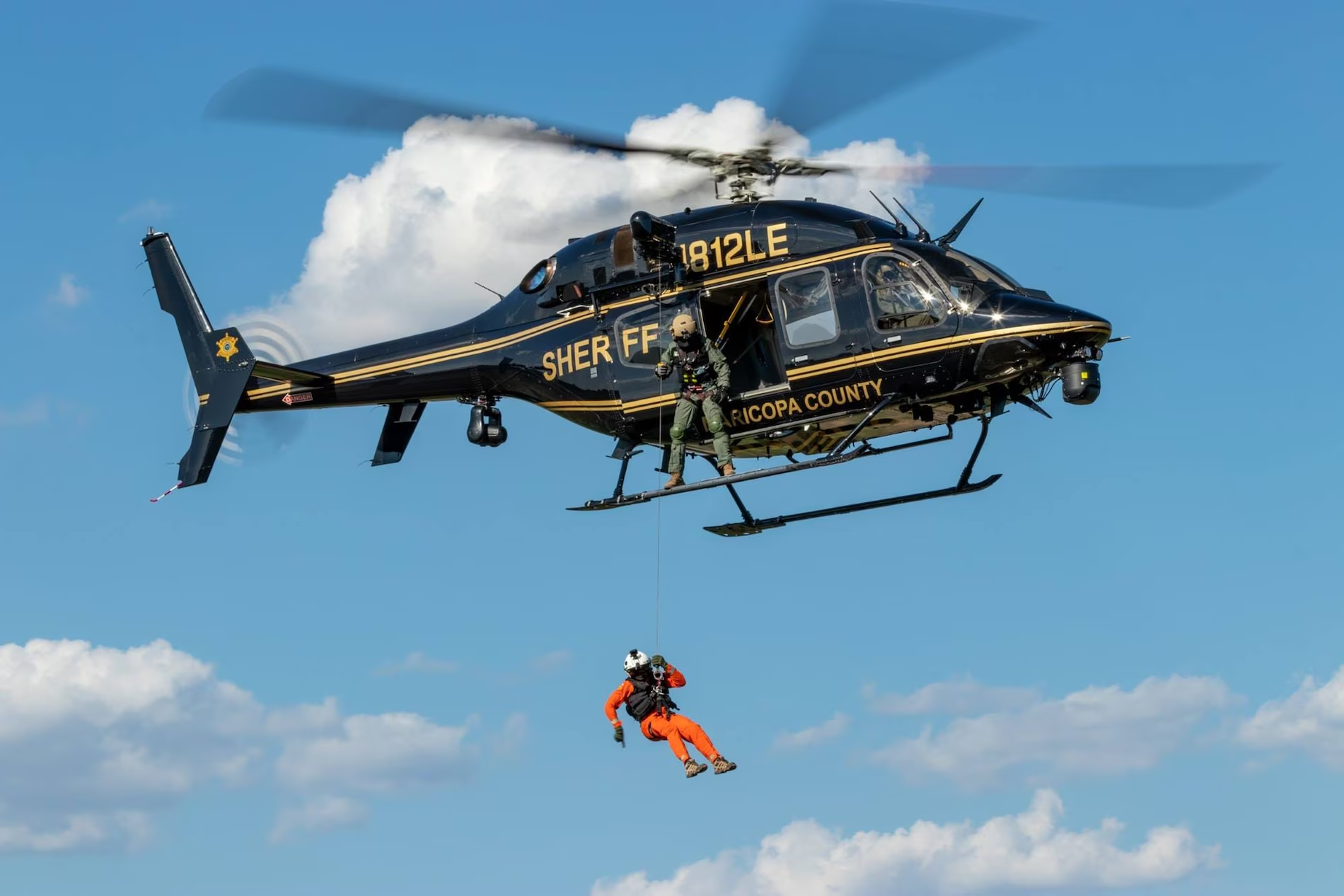
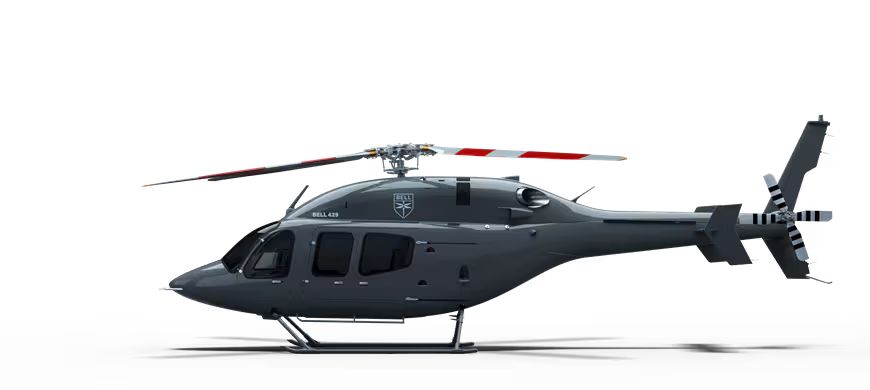
If flying in the High Tatras, it's complicated -- not about the height, it's complicated about the wind and about the turbulence. Air Transport Europe has been on the helicopter market since 1992. So we are operating and providing helicopter emergency medical services for more than 30 years in Slovakia. Currently we operate seven HEMS bases in Slovakia and two bases in the Czech Republic. Annually our crews perform more than 4,000 missions, which I think is a very, very good service to the public and to the visitors who come to Slovakia and need our help. Currently we operate Bell 429s, which make us the largest European Bell provider in the HEMS segment. The 429, from my perspective, it's the best helicopter I have flown ever. So for me it's fantastic -- best helicopter for EMS, according to me. It's fantastic. It's very good when we have the 429 equipped with a winch. It's a very good advantage. It's also a very good operational platform, and a treasure for the patient. It's powerful, it's very good navigationally equipped, and it's very easy to use. You can get information on the wind direction and the strength of the wind, so it's perfect. I think for the pilot it's better because the cabin is more automatic, so the flight is much more safe for us. So I think in our company we go up and up with this Bell 429. Now, for the doctor it's not a problem because you can perform CPR during the transport, you can intubate the patient -- it's better for me as a doctor. In our area we fly more primary missions, but at other bases we're about 50/50 primary and inter-hospital missions. The base itself is very complicated because we have wire and wind operations that are very complicated, so you need to feel at home in this cabin, and then you can start work as a doctor in the mountains. It's very close to the high peaks, so it's especially suitable for these flights. With a wind operation, when you look at the High Tatras, it doesn't look so high -- it's about 2,000 meters, 150 meters of prominence -- but normally the flying itself in these mountains is a little bit more complicated than in the Alps in terms of performance in the mountains. It's very good, I must say -- it has a very powerful tail rotor for the mountains. So yes, it's a stable, light helicopter. It's stable during turbulence and during the changing wind in the mountains itself. Yeah, it's normal, but it's still powerful. And according to the missions, I can say we can do much more with this helicopter compared to others -- you know, it's a lot, something that really goes through my heart. It's my dream job.


Interested in Bell Insights?
Get exclusive, unreleased Bell updates, videos and aircraft news before anyone else. Join the future of vertical lift, today.