
Classic Air Medical: History and Legacy
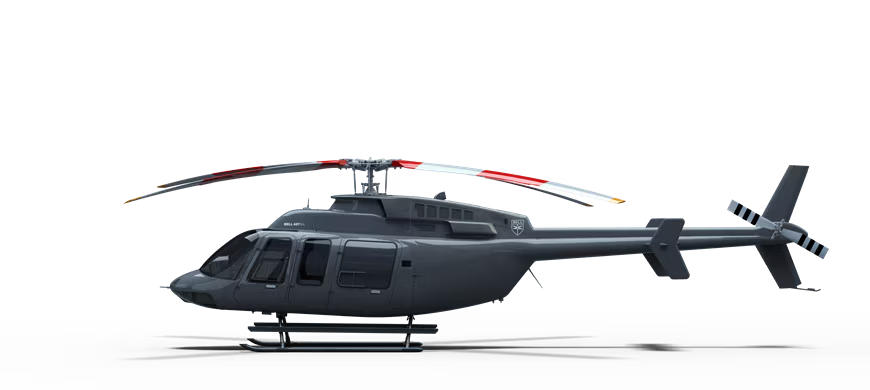
We have 25 locations around the West, and we specifically use Bell 407s -- we love having the fleet. Tony Henderson, Chief Executive Officer of Classic Air Medical -- we were doing some utility work with Jet Rangers way back in the day, then we got into some Bell Long Rangers, and this was back in '85: we had somebody in our group down at Lake Powell, Arizona, get injured, falling off a 40-foot cliff onto his back -- it took us about a five-hour houseboat ride to get him back to the marina, and we thought we could do this a little faster. So we took one of our Bell Long Rangers and basically strapped a stretcher to the seat and became an air ambulance service down there, just for the summers for our first couple of years, and then we got more professional at it and stayed year-round -- that's where we started. Utah's our headquarters -- we're in every state surrounding Utah: Arizona, New Mexico, Colorado, Wyoming, and Nevada, and we're in Puerto Rico, Alaska, and Haiti also, but mostly in Utah and the surrounding states, and it is rugged terrain -- the Bell 407 is awesome for the lifting power. We do have a 429 at our location near Aspen, which just needed a little more power, but the Bell 407s fit our need perfectly. I can remember a very distinct change when we went from Bell Long Rangers to the 407s -- the 407 with the four blades is smooth, really takes the bumps well, and is great for patient care; we've added a lot of stuff over the years, and the weight -- it's been able to take the weight, which is nice. We'd have to add air conditioning for comfort; we're in Fort Mojave, Arizona, super hot down there, and it performs awesome, at the highest levels too. Uptime is phenomenal with Bells, and that's the reason I like the fleet all the same -- we've got a fleet of 25 of these, and being able to have the parts, the support, the training -- you don't have to train on a bunch of different models, so that helps. We love the service provided, it's efficient, the costs are very low in a Bell 407, and so we love that -- having the fleet and the support, we love being able to have parts when we need them readily available, and the support is great. A new training facility really helps us with our pilots too, which is great. So when you have 25 Bell 407s, it's sure nice to have all that support. I've used a bunch of different products over the years, and Bell has always been just this solid standard that's always been there and isn't going away -- it's nice to be able to trust in something that's here today, and it's gonna be there tomorrow.


Interested in Bell Insights?
Get exclusive, unreleased Bell updates, videos and aircraft news before anyone else. Join the future of vertical lift, today.