
Getting Helicopter Snobby with Brandy
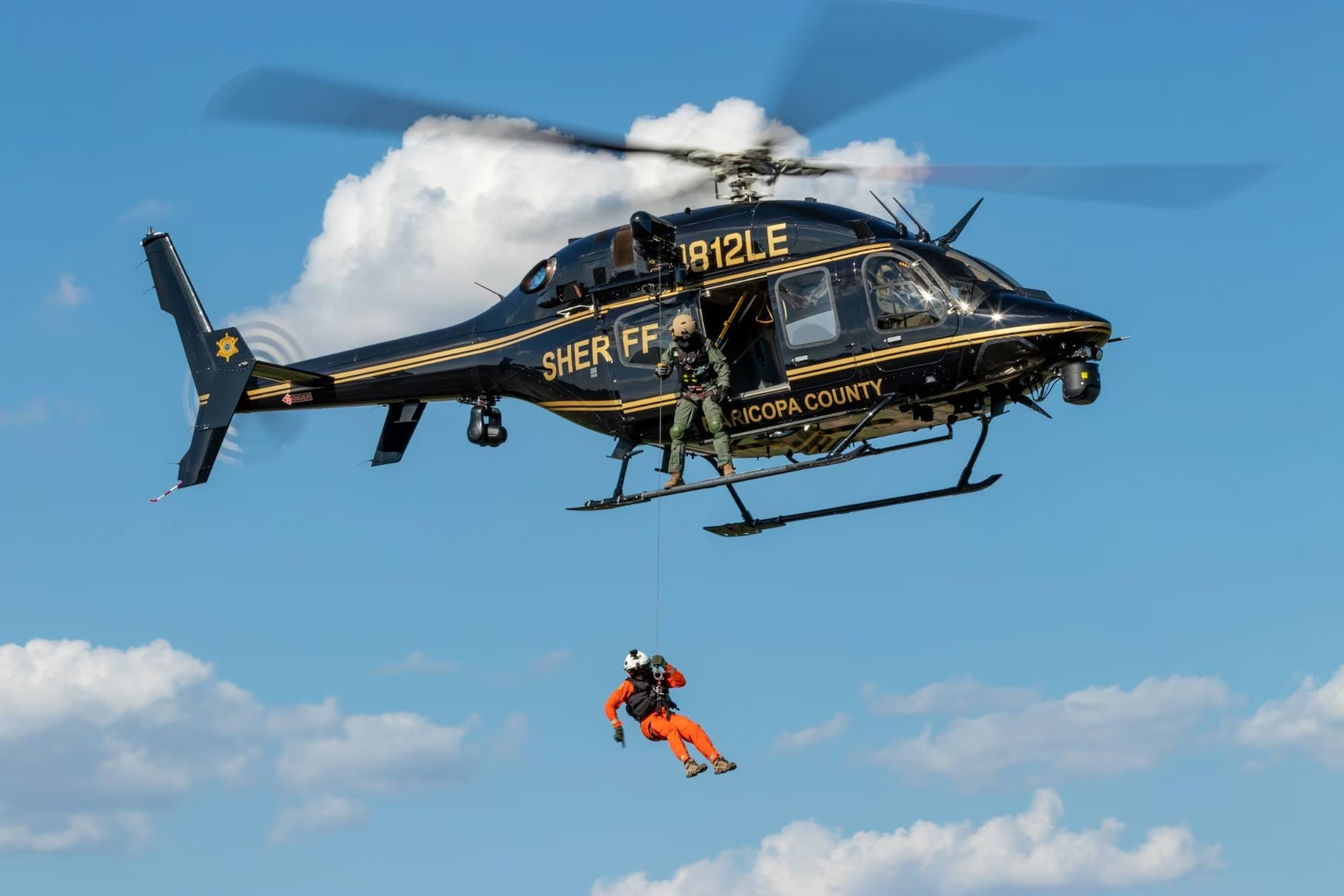
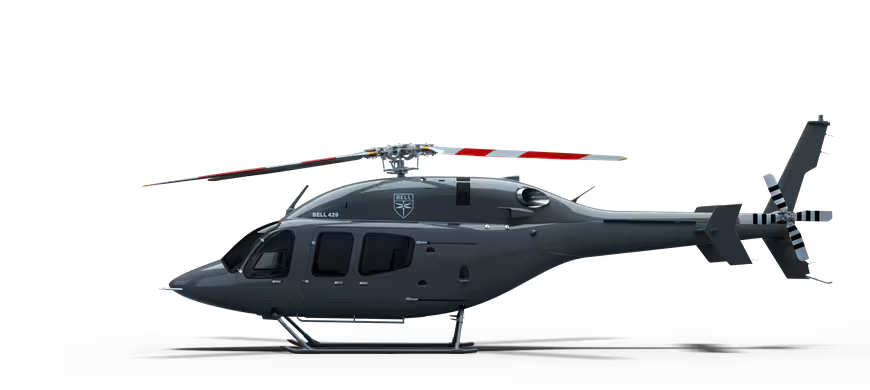
I felt ICU and ER was my life; I loved the whole family dynamic and being part of the whole portion of nursing care. I've been with St. Luke's 23 years, and one day I had the local paramedics come in -- they took a patient from me and asked me if I would be interested in applying for Air St. Luke's; and it's like, hmm, I've never really thought about that, but I did, and thankfully, by a few prayers and the wings of whatever, I was able to become a flight nurse with Air St. Luke's. I started with them in 2007, when we opened the base in Twin Falls, and since then I couldn't imagine not doing it -- I couldn't imagine not being part of this program, the family atmosphere, the group. Brandy Bartholomew, Manager of Quality, Patient Care and Safety, and Flight Nurse based in Twin Falls -- I am responsible for all of our quality metrics, which also includes making sure we're in compliance with all of our regulatory and governing bodies. It's amazing every day -- yes, there's stress, yes, you go through a lot of ups and downs and see what patients and their families go through, but I wouldn't change anything. I think really the difference between ER and ICU compared to flight nursing and being in the aircraft is the autonomy, for one, and the other thing is you know that when you come on duty, whatever comes within your path, you are there with that person at probably one of the worst times of their life, and you know that you are making a difference for them and for their family -- whether it's moms, dads, their children. Based in Twin Falls, we have a lot of long legs, so we're able to go out and land on scene with a patient, and depending on their severity, we can go directly to a level-two or even a level-one trauma center in another state within our performance range. We can be on flat ground, farm ground, landing to pick up someone who's had an AG injury, to the next flight being up in the Sawtooths, high altitude, weather, speed -- it all just kind of comes together as far as being an amazing aircraft, being able to meet all of our needs, being able to load and unload from the side. It's great, because it's such a wide opening for us to be able to get the patients in and do all the interventions we're trained to do -- intubating, surgical crics, chest tubes -- vibration is very minimal, it's great. The other thing that's very beneficial is the room in the back -- we're able to have that patient secure, and in our configuration be able to do everything we need for them, whether it's stabilizing their airway, putting in chest tubes, starting drips, whatever it might be; that configuration means we can get to our equipment and everything we need easily. One of the key things I really respect with this airframe is that we can take family members, and that is so hard, especially when you've got that three-year-old trauma or a little PICU/NICU baby in the back, and mom and dad are able to go with you versus having to drive the hours to get to where they are -- so that's the other great thing about this aircraft as well. I'm very fortunate, as I travel around the United States and teach trauma, we always talk about our platforms, what we fly in, what our experiences are, and I'm able to say that with Idaho Helicopters and our hospital-based program, safety comes first, and they are all on board. We're fortunate that our primary aircraft are 429s, and our backup is a 429 -- so yeah, maybe a little helicopter snobby, but it's because it's a great platform, it's great, it serves our communities and our patient needs tremendously. You just can't say enough about the support from both Idaho Helicopters and St. Luke's Health System, wanting to ensure that we're in amazing aircraft, that we're safe, and able to give back to our communities and not leave people behind. We have a lot of outdoor recreation all around us, and we're able to get there and take care of those patients to the best of our ability. St. Luke's Health System really supports us and our program, because they know the care that we provide in the aircraft we have, and we're giving back to the communities. Thank you to St. Luke's Health System, and again Idaho Helicopters, for allowing us to do what we love -- our crews are amazing.


Interested in Bell Insights?
Get exclusive, unreleased Bell updates, videos and aircraft news before anyone else. Join the future of vertical lift, today.